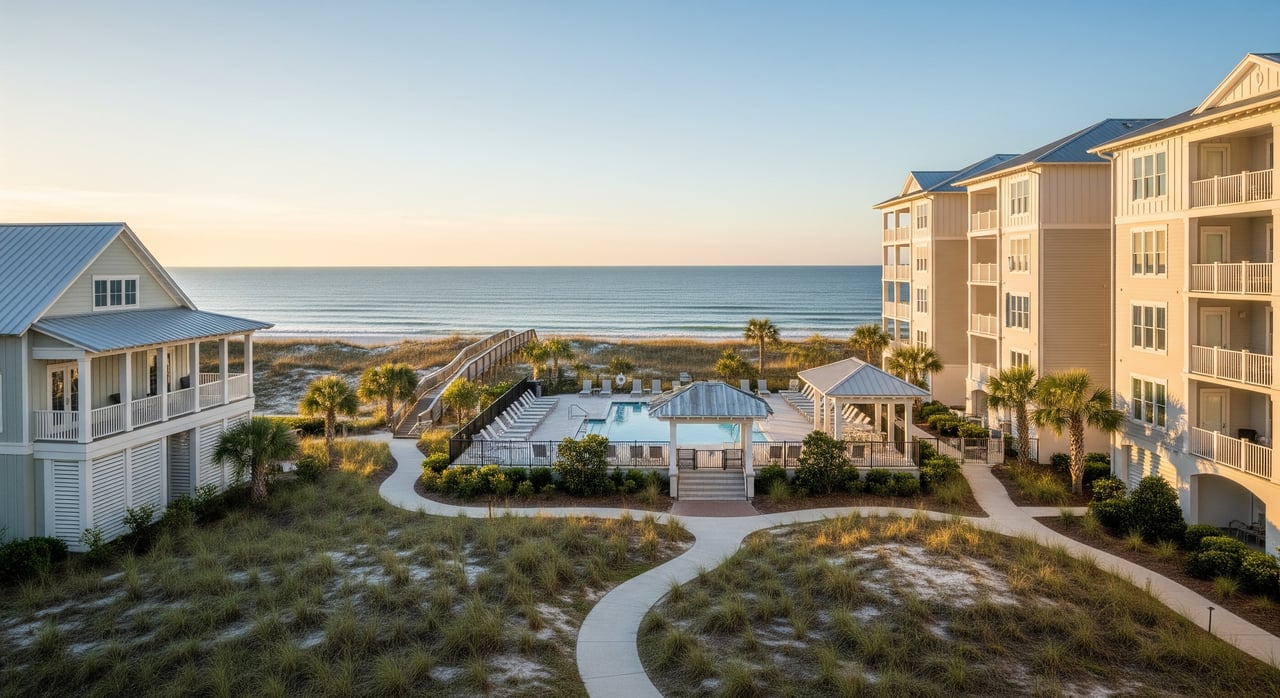
Thinking about a condo near the beach or a home in an HOA along 30A West but not sure what the dues, rules, and reserves really mean for your budget and peace of mind? You’re not alone. Many second‑home and condo buyers wrestle with this decision. In this guide, you’ll learn how HOAs and COAs differ in Florida, what drives costs on the coast, how to evaluate reserves, and the key documents to review before you make an offer. Let’s dive in.
HOA vs. COA basics on 30A West
How ownership differs
In Florida, condominium associations operate under Chapter 718 of the Florida Statutes, while homeowners’ associations operate under Chapter 720. In a condominium, you own your individual unit and a percentage interest in the common elements, such as the roof, exterior walls, elevators, and pool. In an HOA, you usually own the lot and structure, and the association maintains shared areas like roads, landscaping, and amenities.
These differences shape who maintains what. A condo association typically controls the building envelope and shared systems. An HOA often governs standards for exteriors through covenants, while owners handle most home maintenance themselves.
Maintenance and insurance responsibilities
Because COAs manage the building envelope and shared systems, they often carry a master insurance policy for the structure. Unit owners typically carry an HO‑6 policy for interior finishes and personal property, depending on the declaration. In HOAs, individual owners generally insure the home itself, and the association insures only common elements. Always confirm coverage boundaries in the declaration and insurance certificates.
What dues cover on 30A West
Association dues in both COAs and HOAs usually fund routine maintenance, common utilities, trash, landscaping, pool and elevator service, gates or security, and management. Budgets also include administrative costs like legal, accounting, and association insurance. A portion should go toward reserves for future capital repairs.
Factors on 30A West can push dues higher. Salt air increases corrosion, painting, and roofing frequency. Coastal wind and hurricane exposure raise insurance costs, especially in condos with shared building systems. Many area communities offer amenities like pools, tennis or pickleball courts, gated entries, and private beach access. Short‑term rentals can add wear and management needs.
COA cost tendencies
Condo dues are often higher relative to a comparable HOA because the association insures and maintains the building envelope and many shared systems. Insurance line items, hurricane deductibles, and claims history can be major cost drivers. Reserves must cover big‑ticket items like roofs, siding, balconies, waterproofing, and elevators.
HOA cost tendencies
HOA dues can be lower when common maintenance and amenities are modest. High‑amenity HOAs can rival or exceed some condo dues. Individual owners assume more responsibility for structure maintenance and insurance, which shifts some costs from the association to each homeowner.
Special assessments and reserves
Both COAs and HOAs can levy special assessments to cover unexpected or underfunded projects, as allowed by their governing documents and Florida law. Strong, well‑funded reserves reduce the chance of surprise assessments. Underfunded reserves increase the likelihood of special assessments or borrowing.
Reserves and assessments: what to look for
A reserve study identifies the components that will need replacement, their useful lives, and projected costs, then recommends funding levels. Healthy budgets reflect routine contributions to reserves and a plan to keep pace with future needs.
Watch for these red flags:
- No recent reserve study in the last 2 to 3 years.
- Very low reserve balance compared to expected replacement costs.
- Large or recurring special assessments or outstanding loans.
- Vague budget items labeled “contingency” without detail.
- Minutes or inspection reports noting deferred maintenance or structural issues.
Reserve quality matters even more on the coast, where salt air and storms shorten life cycles for exterior finishes and mechanical systems. A building with a thoughtful reserve plan is less likely to surprise you after closing.
Rules and rentals on 30A
Both COAs and HOAs can regulate exterior changes, landscaping, parking, pets, quiet hours, and trash. Always check how rules are adopted and amended, especially if you are a second‑home owner who may not attend every meeting.
Short‑term rentals are common along 30A. Whether you can rent your unit and on what terms depends on the association documents and local government rules. Some communities allow rentals with registration, minimum stays, or caps on the percentage of rental units. Others prohibit or limit them.
If you plan to rent, ask:
- Are rentals permitted, and what is the minimum rental period?
- Is there a cap on the share of units that can be rented?
- Are registration, deposits, or a specific rental manager required?
- Are there added fees or higher dues for rental units?
Insurance and risk on the coast
Flood risk is common along 30A. Lenders often require flood insurance in mapped FEMA flood zones. In condos, confirm whether the association’s master policy includes flood coverage for the building and what you must cover inside the unit. In HOAs, you typically handle your own home policy and any flood coverage.
Wind and hurricane insurance can be expensive in Florida. Many associations carry a master wind policy with a hurricane deductible. After a claim, owners may face special assessments to cover deductibles and repairs. Claims history can affect future premiums and dues.
Local risk factors on 30A West include hurricanes and tropical storms, salt‑air corrosion, and long‑term erosion or sea level changes. Communities may face costs for dune maintenance, sea walls, or beach renourishment. Review minutes and budgets for any related projects or assessments.
Your due diligence checklist
Documents to request before you offer
- Declaration of covenants or condominium declaration and recorded plats.
- Bylaws and articles of incorporation.
- Current year budget and the previous 2 to 3 years of budgets.
- Most recent financial statements for the last 12 to 24 months.
- Latest reserve study and current reserve balance statement.
- Insurance certificates or master policy summaries, including wind and hurricane deductibles.
- Association minutes for the last 12 months, plus any special meetings on assessments, litigation, or capital projects.
- A detailed list of monthly assessments, what they cover, any pending special assessments, and delinquency totals.
- Resale certificate or estoppel letter, as applicable.
- Any disclosures of current or pending litigation.
- Rules and rental restrictions, including minimum rental terms and registration steps.
- Management agreement and major service contracts.
- Recent inspection reports for buildings or common structures when available.
- For beach‑adjacent properties, any dune maintenance agreements, access easements, or renourishment assessments.
Questions to ask the association or seller’s agent
- How often are special assessments levied, and are any planned?
- What capital projects are upcoming or recently completed?
- Has the association filed recent wind, flood, or structural claims?
- What percentage of units are rentals, and are there waiting lists for parking or storage?
- When was the last reserve study, and when is the next update?
- Are there restrictions that affect how you plan to use the property?
Red flags to investigate further
- No recent reserve study and low reserves relative to needs.
- Large pending or repeated special assessments.
- Ongoing or recent litigation with significant potential exposure.
- Operating deficits or high delinquency rates in the budget.
- Unclear insurance boundaries or very high hurricane deductibles.
- Rules or local regulations that conflict with your intended use.
Practical steps for 30A second‑home and condo buyers
- Confirm the flood zone and obtain a flood insurance estimate during due diligence.
- If you plan to rent, verify permission and review meeting minutes for enforcement and compliance trends.
- Arrange inspections suited to property type, including building envelope or balcony checks for condos.
- Ask for minutes covering beach access, dune management, and storm preparedness.
- Compare two or three communities side by side using budgets, reserve studies, and rules before you make an offer.
How we help you compare HOA vs. COA
You deserve clear answers before you commit. Our team pairs local market knowledge with hands‑on construction experience to help you evaluate building systems, insurance implications, and reserve health. We can request sample association documents early in your search so you can compare communities objectively.
If you are weighing a condo against a home in an HOA, we will help you model total cost of ownership, highlight maintenance responsibilities, and review insurance coverage boundaries so there are no surprises after closing. When you are ready, reach out to schedule a quick, no‑pressure planning call with 316 Realty Group LLC.
FAQs
What is the difference between an HOA and a COA in Florida?
- HOAs are typically for single‑family or townhome communities where you own the lot and structure, while COAs are condominiums where you own a unit and a share of common elements; each is governed by a different Florida statute and has different maintenance and insurance responsibilities.
On 30A West, why are condo dues often higher than HOA dues?
- Condo associations insure and maintain the building envelope and shared systems, and coastal factors like wind exposure, salt‑air corrosion, and amenities increase costs that are reflected in COA budgets and reserves.
How do reserves affect special assessments in coastal communities?
- Well‑funded reserves help pay for predictable capital projects, reducing the chance of surprise special assessments, while underfunded reserves make assessments or borrowing more likely after storms or major repairs.
What should rental‑minded buyers verify before purchasing along 30A West?
- Confirm that rentals are permitted, note the minimum rental period, check for caps on rental units, registration steps, added fees, and any evidence of strict enforcement in recent meeting minutes.
What insurance should you review for a 30A West purchase?
- Review the association’s master policies for wind and flood, deductible amounts, and coverage boundaries, then confirm what you must insure separately for the unit or home, including interiors, contents, and liability.