Turn off Highway 85 north of Crestview and you will see it before you see anything else: a welcome center and an obelisk marking the entrance to Heritage Plantation. Builder brochures for the neighborhood describe a grand entrance, wooded homesites, and a community pool tucked into a stand of pines. The former golf course is no longer an amenity. The course that gave Heritage Plantation its name and its layout closed the same year it opened.
The course's closure is useful context when comparing Heritage Plantation with other Laurel Hill communities. A community name or description of its setting does not establish which amenities are currently available. Buyers can confirm current amenities and property details before comparing options.
A Golf Digest Top 10 Course, Closed Before Its Second Season
Heritage Plantation's golf course opened in 2008, designed by architect Bill Bergin on a site with more than 100 feet of natural elevation change cut through wetlands and pine forest north of Crestview. Golf Digest named it one of its Top 10 New Courses for 2008, a real distinction for a rural Okaloosa County project. It closed permanently that same year and the fairways were converted into a residential subdivision.
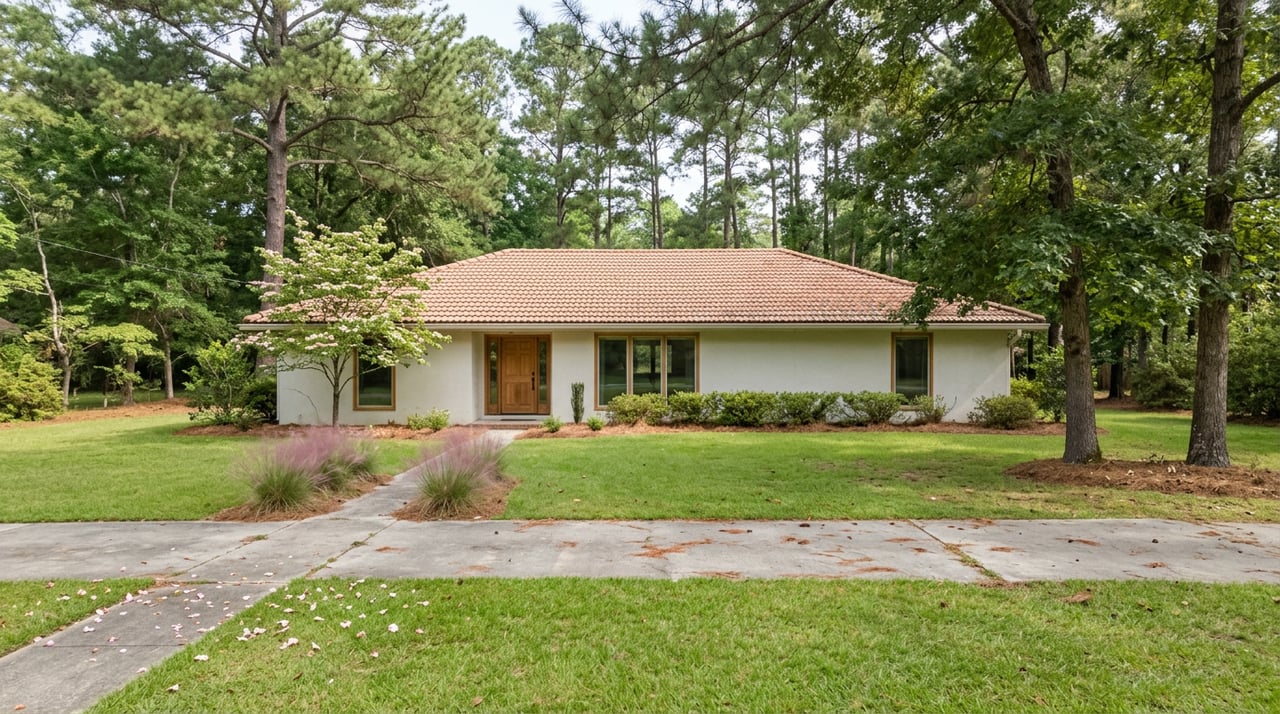
Nearly two decades later, the name remains. D.R. Horton and other builders now sell new construction inside Heritage Plantation, and their marketing highlights a grand entrance, expansive wooded lots, a tucked-away setting, and a community pool. The golf course is no longer an amenity, and there is no clubhouse tied to a course or fairway lots with tee views. Heritage Plantation is a wooded subdivision with a pool.
What Actually Sits on the Ground Today
Current new construction in Heritage Plantation runs from roughly $304,900 to $399,900 depending on floor plan, with homes ranging from about 1,799 to 2,560 square feet. Resales in the community have traded between roughly $264,000 and $374,000, averaging close to $150 a square foot. Lots are large by subdivision standards, and several builders market the wooded, rural feel of the setting as the primary draw, which lines up with what is actually there: space, tree cover, and quiet, not a golf lifestyle.
For a clearer comparison, buyers can ask what the community pool includes, whether there is a clubhouse or just a pool deck, and whether wooded lots along the old course routing carry different pricing from interior lots. Those details may not be clear from a listing photo of the entrance sign.
The Land Economics That Actually Set Prices Here
Heritage Plantation is one option among many in a Laurel Hill land market that is fundamentally about acreage, not amenities. As of late summer 2026, dozens of active land listings around Laurel Hill, from small buildable lots to a 261-acre turnkey cattle operation off Highway 85, put the average asking price per acre at roughly $9,349, with listings averaging about $390,000 across the parcels on the market. Much of this land sits along Millside Road and Highway 85 with agricultural or rural residential zoning, marketed toward barndominium builders, hobby farmers, and buyers who want ten, twenty, or eighty acres rather than a subdivision lot.
That land economics story connects directly to financing. USDA Properties reports that most of Okaloosa County outside the Crestview and Fort Walton Beach urban clusters remains eligible for USDA Rural Development loans, and its Okaloosa County page identifies Laurel Hill as a city likely to have USDA-eligible properties available. Before writing an offer on any Laurel Hill property, whether it is a Heritage Plantation lot or forty acres of timber off Millside Road, it is worth running the address through the USDA's own property eligibility map rather than assuming based on the zip code.
The mechanism worth understanding is this: Laurel Hill's affordability is not an accident of the market ignoring the area. It is the direct product of large lot sizes, rural residential and agricultural zoning that keeps density low, and a financing program built specifically for places like this. A name like Heritage Plantation can imply resort-style amenity pricing. The land underneath it, and the loan programs that make it accessible, tell a plainer story about space and cost.
Life on This Stretch of Highway 85
Daily life in Laurel Hill is built around that same rural character. In town, options are limited to a handful of local spots including Laurel Hill Grill, and most residents drive roughly 18 miles to Crestview for major grocery runs, dining, and other services. Local recreation includes Gene Clary Park and Evolution Airsoft Field, and Laurel Hill School serves students pre-K through 12 as a Purple Star-designated campus within Okaloosa County's school choice system. North Okaloosa Medical Center is the nearest hospital for residents along the Highway 85 corridor.
None of that is a complaint. It is simply what the area is: quiet, spread out, and organized around a two-lane highway rather than a downtown core. For a buyer weighing forty acres against a Heritage Plantation lot, the honest comparison is between two different versions of rural living, not between a golf community and everything else. One offers a subdivision pool and a shorter build timeline. The other offers total control over the land and a longer runway to build exactly what you want.
What to Verify Before You Tour
If you are looking seriously at Heritage Plantation or any acreage in this corridor, a few questions can help clarify property details before a tour:
- Ask the builder or listing agent directly whether the community amenity is a pool only, or a pool plus other shared facilities, and get that in writing before assuming anything based on entrance signage.
- Review the plat and zoning designation, and ask which amenities are included; names such as "plantation" or "estate" do not specify the current amenity package.
- Check USDA property eligibility on the address specifically, since boundaries can shift block by block even within a small town.
- For raw land, confirm current zoning against your intended use. Agricultural and rural residential designations around Laurel Hill vary in how many homes per acre they allow, and that number changes what the land is actually worth to you.
This is exactly the kind of due diligence where having someone with hands-on construction background matters. Knowing what a plat says is one thing. Knowing what it means for a build timeline, a septic layout, or a driveway across forty acres of timber is another, and that gap is where buyers get surprised months into a project rather than before they sign.
Laurel Hill rewards buyers who read past the name on the entrance sign. The town has real advantages: affordable land, USDA financing, and space to build exactly what you want. Heritage Plantation offers a wooded subdivision with a pool rather than a golf course. Know the difference before you tour.
If you are weighing a lot in Heritage Plantation against acreage elsewhere in Laurel Hill, or trying to figure out what a specific parcel's zoning actually allows, 316 Realty Group can walk the ground with you and pull the paperwork before you commit to either. Schedule a free consultation and bring your questions about the fine print, not just the floor plan.
This article is general information, not legal, tax or financial advice. Consult a qualified professional about your situation.