A homeowner on Holiday Isle walked the beach behind her house this spring and watched a dredge pipe lay down sixty feet of new sand where storm erosion had eaten the dune for six years. She figured that settled it. New beach, easier sale, one less thing to worry about before she listed. It doesn't work that way. The sand changed. The paperwork that decides whether her closing goes smoothly did not move an inch.
That gap between what got fixed and what still has to be disclosed is the thing sellers on Destin's waterfront consistently misjudge in 2026. Several separate documents shape how a waterfront sale actually closes here, and none of them care whether the beach in front of the house looks better than it did last year.
What the New Sand on Holiday Isle Actually Bought
The project behind that fresh beach was real and it was substantial. Okaloosa County and FEMA launched a $10 million beach restoration on west Destin the week of March 23, 2026, aiming to replace roughly 150,600 cubic yards of sand lost to erosion from Hurricane Sally back in 2020. Great Lakes Dredge and Dock Company handled the work, pumping sand from an offshore dredge through a pipeline onto two stretches of Holiday Isle between South Bay and the jetty, adding an estimated 60 to 80 feet of beach to protect the homes sitting behind it. Nine million of the ten million came from FEMA disaster recovery funds, with the county's tourism development reserves covering the rest, and the work wrapped in late April.
That is genuinely good news for anyone who owns or is buying a Gulf-front lot on that stretch. It is not, however, a reset button. Renourishment adds sand seaward of a property line. It does not move the Coastal Construction Control Line, does not change a home's FEMA flood zone designation, and does not alter what a seller is legally required to tell a buyer before contract execution. The dune got healthier. The disclosure obligation stayed exactly where it was.
The Disclosure That Doesn't Care About the Sand
Any Destin property sitting partially or totally seaward of the Coastal Construction Control Line triggers a specific requirement under Florida law, regardless of how recent or successful the last renourishment project was. Section 161.57 of the Florida Statutes requires the seller to hand the buyer a written disclosure before both parties sign the contract, and the statute even spells out the exact wording:
The property being purchased may be subject to coastal erosion and to federal, state, or local regulations that govern coastal property, including the delineation of the coastal construction control line, rigid coastal protection structures, beach nourishment, and the protection of marine turtles.
In practice, sellers frequently negotiate a written waiver of the survey requirement into the contract, which shifts the cost and effort of locating the line onto the buyer, according to Lowndes law firm's analysis of the statute. Skipping the disclosure altogether does not unwind the sale. Florida law is explicit that a seller's failure to deliver it does not give the buyer grounds to rescind, per the current text of the statute. But an undisclosed CCCL status tends to surface anyway, usually during a title search or a lender's due diligence, and a buyer who finds it late feels misled even when the contract stays enforceable. Florida Realtors' own guidance to agents treats this as a routine step precisely because it gets missed so often.
Here is the part most generic guides skip.
If You're on the Bay, It's a Different Line Entirely
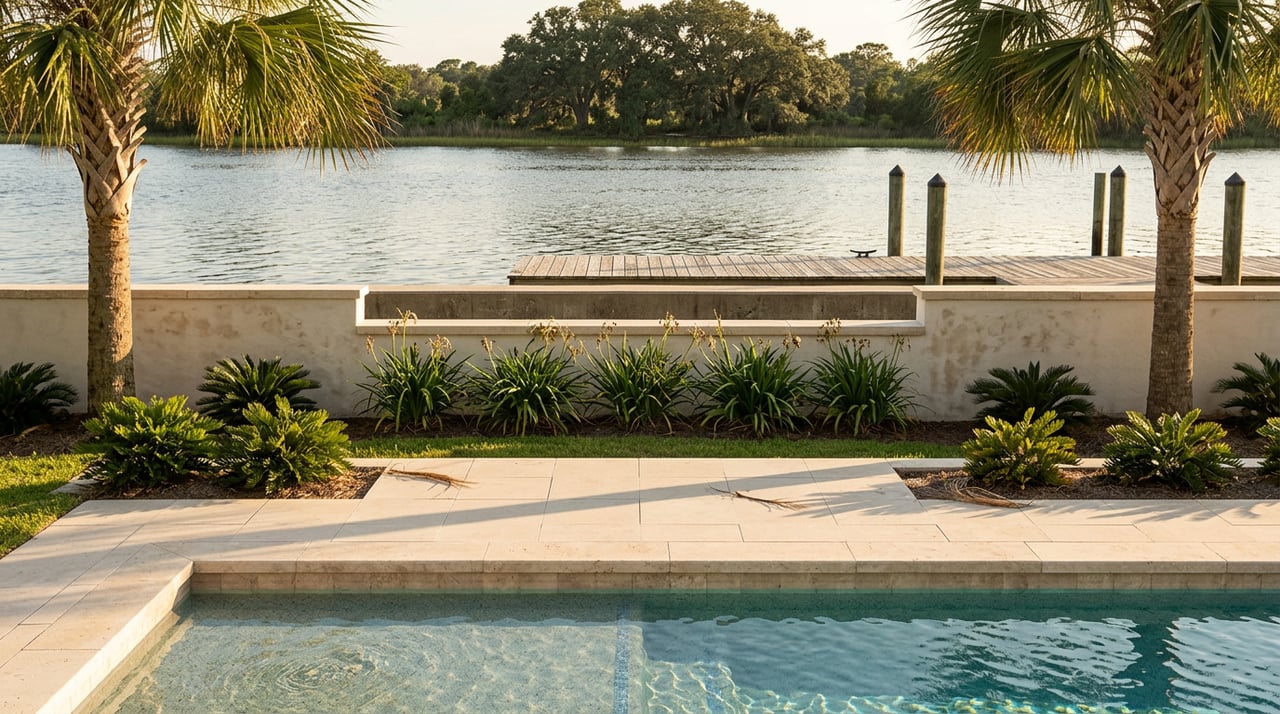
Destin sells two distinct kinds of waterfront, and they answer to different rules. The Florida Department of Environmental Protection says the CCCL is drawn along sandy beaches that front the Gulf of Mexico, the Atlantic, or the Straits of Florida. Choctawhatchee Bay, the 129-square-mile body of water bordering Destin to the north and connecting through Destin Harbor to the Intracoastal Waterway, doesn't front the Gulf directly.
What they trigger instead is a construction permit requirement that runs through the city. The City of Destin's own Community Development Department FAQ confirms that any waterfront modification, including seawalls, docks, and piers, requires a permit and direct contact with the department before work begins, and that both foundation surveys and structural drawings are required for anything beyond minor repair. That matters at resale because a seawall built decades ago under an older permit, or repaired without one, becomes a documentation problem the moment a buyer's lender starts asking questions. Many of Florida's concrete and steel seawalls date back to the state's mid-century development boom, and a fair number have already outlasted their intended service life, which is why structural engineers increasingly recommend inspecting older residential seawalls every one to two years rather than waiting for visible cracking.
The distinction sellers need to hold onto:
| Gulf-front (Scenic Hwy 98 / Holiday Isle) | Bay-front (Choctawhatchee Bay communities) | |
|---|---|---|
| Governing line | Coastal Construction Control Line (state, FDEP) | city permit jurisdiction applies |
| Mandatory seller disclosure | Yes, under F.S. 161.57 | |
| What triggers scrutiny at resale | Undisclosed CCCL status found during title search | Undocumented seawall or dock permit history |
| Who reviews it | City of Destin Community Development Dept. |
Two different lines, two different paper trails, and a seller who assumes one covers both is the seller who gets a surprise during due diligence.
The One Rule That Doesn't Care Which Water You're On
Everything above splits by which water a home sits on. This next one doesn't. According to 1800Insurance.com, Citizens Property Insurance has been phasing in a rule that ties flood coverage to wind coverage in high-risk zones. Under the current phase-in, Citizens now requires flood insurance to keep wind coverage in high-risk zones even for owners who carry no mortgage, and that requirement is set to extend to any home regardless of value or flood zone by 2027.
That single mechanism reshapes what a buyer's actual monthly cost looks like at closing, independent of the sale price on the contract. The average Destin homeowners premium for a home valued between $350,000 and $450,000 runs around $6,500 a year as of late 2025, compared with roughly $5,400 statewide, and that gap widens once a lender or Citizens forces a separate flood policy into the mix. The broader 2026 picture is a little more forgiving than it has been. Florida rates are flat to down for the first time in about a decade, with Citizens approving a 2.6 percent statewide average decrease, but the Panhandle's cut has run smaller than South Florida's because Gulf-exposed wind risk here was never inflated by the litigation costs that drove the earlier increases. A buyer running numbers on a Choctawhatchee Bay bayfront lot and a Gulf-front lot on Holiday Isle needs to model the flood requirement into both, because the CCCL line has no bearing on which side of that insurance rule a property lands on.
What This Means Before You List
For Gulf-front sellers, order the CCCL survey or affidavit before you go to market, not after an offer comes in. Buyers negotiate harder when they discover the line themselves.
For bay-front sellers, pull whatever seawall and dock permit history the city has on file and consider a pre-listing structural check. A repair surfacing during a buyer's inspection period costs leverage. The same repair disclosed upfront costs a line item.
For everyone on Destin's waterfront, get the flood zone determination in writing and be ready to talk through what it means for a buyer's carrying cost, because that conversation is happening at the closing table whether you start it or not.
Jon Fiegel's twenty-plus years in construction is exactly the kind of background that reads a seawall inspection report or a permit history and tells you what it actually means for a sale, not just what it says on paper. If you're weighing a Destin waterfront listing this year, that's the read worth getting before you set a price.
FAQ
Who typically pays for a seawall inspection before closing? In practice, buyers often order one during their due diligence period, but sellers on older bayfront lots increasingly order a pre-listing inspection to get ahead of a repair conversation that could otherwise stall negotiations, since a seawall or dock in poor condition can mean a five- or six-figure repair.
If I own my Destin home outright, do I still need flood insurance? Under Citizens Property Insurance's current phase-in, homes in high-risk flood zones now need flood coverage to keep wind coverage even without a mortgage, and that requirement is scheduled to expand to all homes regardless of value or flood zone by 2027.
Ready to figure out which paperwork applies to your stretch of Destin's waterfront before you list? 316 Realty Group offers a free consultation to walk through your property's specific disclosure and inspection picture, backed by two decades of hands-on construction experience.
This article is general information, not legal, tax or financial advice. Consult a qualified professional about your situation.